
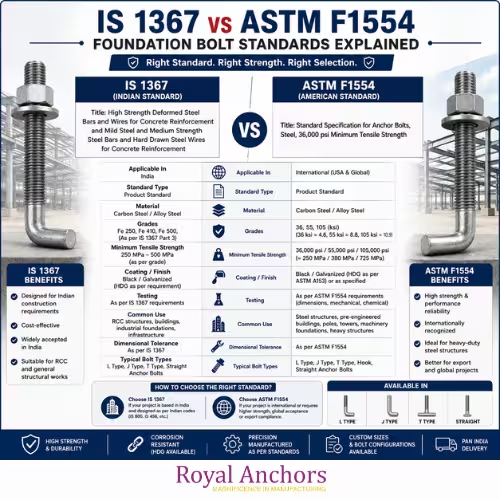
IS 1367 vs ASTM F1554 — Foundation Bolt Standards Explained
When specifying Anchor Foundation Bolts for construction and industrial projects in India, engineers and procurement managers frequently encounter two main standards: IS 1367 (Indian Standard) and ASTM F1554 (American Standard). Understanding the differences between these standards is essential for ensuring the right bolt is specified and supplied for your project. At Royal Anchors ISO 9001:2015 certified Anchor Foundation Bolt manufacturer in Chennai we manufacture bolts compliant with both IS and ASTM standards. In this guide we explain each standard clearly.
Other Important Foundation Bolt Standards
IS 1363: Hexagon Head Bolts, Screws and Nuts
IS 1363 specifies the dimensional requirements for hexagon head bolts and nuts used in construction. All Royal Anchors foundation bolt nuts and hex heads comply with IS 1363.
IS 2629: Hot Dip Galvanizing on Iron and Steel
IS 2629 is the Indian standard for Hot Dip Galvanizing. All Royal Anchors Hot Dip Galvanized Foundation Bolts are galvanized as per IS 2629 with a minimum coating thickness of 85 microns.
IS 1573: Electroplated Coatings of Zinc on Iron and Steel
IS 1573 governs the GI Zinc Electroplating process used for Royal Anchors’ zinc-plated foundation bolts.
Which Standard Should You Specify?
- For standard Indian construction projects: specify IS 1367 with appropriate property class (4.6 for standard, 8.8 for high-tensile)
- For government and infrastructure projects: S 1367 is mandatory for compliance with Indian Standards
- For projects with US engineering specifications: specify ASTM F1554 Grade 36, 55, or 105
- For export projects: specify ASTM F1554 with mill test certificates
- For IS/BIS certified products: Royal Anchors is ISO 9001:2015 certified and manufactures per all relevant IS standards
Royal Anchors Standards Compliance
- ISO 9001:2015 Certified: Certificate No: QDW2410922
- IS 1367 compliant: all property classes (4.6, 8.8, 10.9)
- ASTM F1554 compliant: Grade 36, 55 and 105
- IS 2629 compliant: Hot Dip Galvanizing
- IS 1573 compliant: GI Zinc Plating
- IS 1363 compliant: Hex nuts and bolts
- Mill test certificates and inspection reports provided on request
FAQs
What is the difference between IS 1367 and ASTM F1554 foundation bolts?
The main difference is that IS 1367 is an Indian standard for fasteners and mechanical properties, while ASTM F1554 is an American standard specifically developed for anchor bolts used in concrete foundations. IS 1367 bolts are commonly specified in Indian construction projects, whereas ASTM F1554 bolts are used in projects following U.S. or international engineering specifications.
Which foundation bolt standard is used in India?
For most construction, industrial, and infrastructure projects in India, IS 1367 is the preferred and often mandatory standard. Common property classes include 4.6 for general structural applications and 8.8 for high-tensile requirements.
What are ASTM F1554 Grade 36, Grade 55, and Grade 105 bolts?
ASTM F1554 defines three anchor bolt grades based on strength:
-
Grade 36: Standard-strength anchor bolts for general construction.
-
Grade 55: Medium-strength anchor bolts for structural and industrial applications.
-
Grade 105: High-strength anchor bolts for heavy-duty and critical load-bearing installations.
The higher the grade, the greater the tensile and yield strength of the bolt.
Are Hot Dip Galvanized foundation bolts covered under IS standards?
Yes. IS 2629 specifies the requirements for Hot Dip Galvanizing on iron and steel products, including foundation bolts. Hot Dip Galvanized bolts provide excellent corrosion resistance and are widely used in outdoor structures, PEB buildings, transmission towers, and infrastructure projects.
Can Royal Anchors supply both IS 1367 and ASTM F1554 certified foundation bolts?
Yes. Royal Anchors, Chennai, manufactures Anchor Foundation Bolts in compliance with IS 1367 property classes (4.6, 8.8, and 10.9) and ASTM F1554 Grades 36, 55, and 105. We also provide Hot Dip Galvanizing as per IS 2629, GI Zinc Plating as per IS 1573, and mill test certificates and inspection reports on request.
